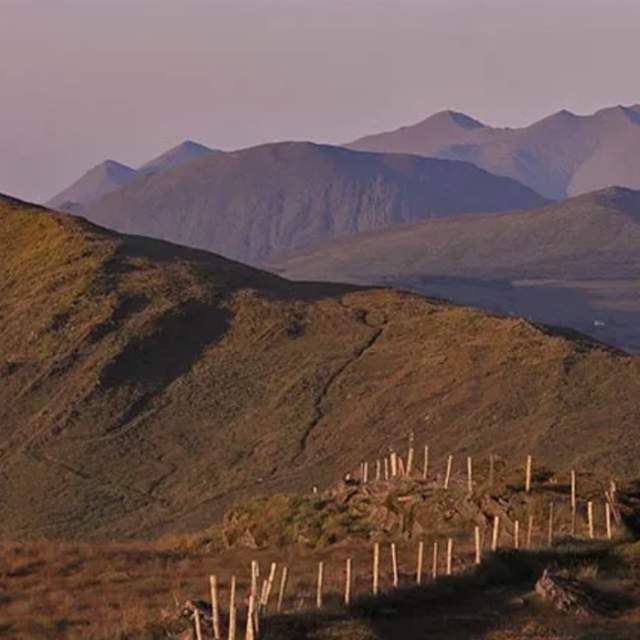
If you’re wondering what heritage sites to visit in Kerry this autumn, you’re spoilt for choice. You can step inside a medieval castle, explore the former home of one of Ireland’s most important historical figures, walk through the ruins of a medieval cathedral and stand among stones that have been part of the landscape for thousands of years.

And you don’t necessarily need a car to do it.

Several of these heritage sites can be reached using TFI Local Link Kerry. So, if someone asked me where to I'd send them for a taste of Kerry's history this autumn these are the five to start with.

Derrynane House – Caherdaniel

Back to Top of List

On the southern tip of the Iveragh Peninsula, Derrynane House & Gardens offers a very different way to experience Kerry’s history.

This was the ancestral home of Daniel O’Connell, known as ‘The Liberator’, and the house is now part of Derrynane National Historic Park. Inside, you can discover objects and stories connected with O’Connell and the O’Connell family, while outside, the wider estate opens out towards woodland, gardens and the coast.

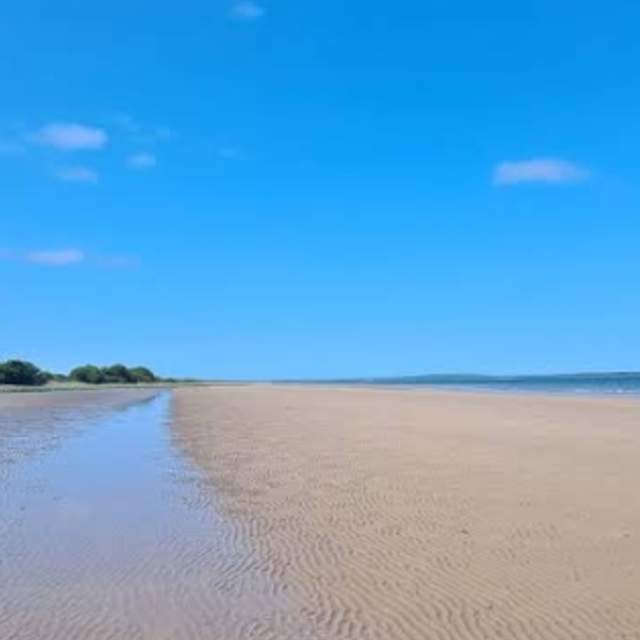
Autumn is a beautiful time to visit. The changing colours of the trees add warmth to the historic grounds, while the nearby coastline and Derrynane Beach give you a chance to experience the landscape that surrounds the house. You can combine the history of the house with a walk through the grounds and down towards the beach.

And if you’re travelling without a car, the journey to Derrynane can become part of the adventure. TFI Local Link Route 281 stops at Cathair Dónall (Caherdaniel) Village Cross, around 3.5 km from Derrynane House. Rather than simply seeing the village from a bus window, you have the opportunity to explore Caherdaniel, one of Kerry’s beautiful coastal villages, before continuing on foot towards Derrynane.

The walk takes around 40 minutes along the local coastal road, giving you time to take in the surrounding countryside and coastal landscape as you make your way towards the house and Derrynane Beach. The road is narrow and does not have a continuous footpath, so care is needed, but the walk means you get to experience more of this part of Kerry along the way.

Getting there by TFI Local Link

Bus: TFI Local Link Route 281
Stop: Cathair Dónall (Caherdaniel) Village Cross
Distance to Derrynane House: Approximately 3.5 km
Walking time: Approximately 40 minutes

Opening & tours

Open: Daily until 1 November 2026.
October opening: 10am–4pm.
Tours: The house can be visited as part of a tour of Derrynane National Historic Park.

What Is Near Derrynane House & Gardens?

Cahergall Stone Fort – Cahersiveen

Back to Top of List

If you want to see a much older side of Kerry, make your way to Cahergall Stone Fort, just outside Cahersiveen.

Known in Irish as An Chathair Gheal, meaning “the Bright Stone Fort”, Cahergall is one of a group of ancient stone forts near the Valencia River Estuary. Built as a defensive homestead, its impressive circular walls rise up to four metres in places and enclose the remains of a central stone hut. The fort dates from Ireland’s early medieval period, when ringforts were used as defended settlements.

Autumn is a beautiful time to explore Cahergall. The changing colours across the surrounding fields and hills bring warmth to the ancient stone, while the lower autumn light highlights the texture of the dry-stone walls. There’s no visitor centre or guided tour here, so you can take your time exploring the fort and taking in the views across the surrounding countryside.

The fort is open as an unguided National Monument, with access during daylight hours. There are uneven surfaces and stone steps within the fort, including steps leading up onto the ramparts, so it is worth taking care when exploring. It is not a fully accessible, step-free attraction.

If you’re travelling without a car, TFI Local Link Route 280 connects Cahersiveen with Waterville, Glenbeigh, Killorglin, Beaufort, Fossa and Killarney, with a stop at Cahersiveen Fair Green. Other Local Link services also serve the town.

Once you’re in Cahersiveen, you can turn the visit into a walking adventure. The Castlequin–Paddy Casey Loop starts at Cahersiveen Sports Centre and takes in views of Cahergall Stone Fort and Leacanabuaile Ring Fort, as well as Valentia Island, the River Ferta, Doulus Head and, on the longer route, views towards Skellig Michael and Dingle Bay. The short loop is 3 km and takes about one hour, while the longer loop is 5.3 km and takes approximately 1 hour 45 minutes.

You’ll also see Ballycarbery Castle from the surrounding area. The ivy-covered ruins make a beautiful photograph against the autumn landscape, but the castle itself is on private property and is not open to the public. Visitors should stay outside the restricted area and admire it from a distance.

That means you can combine several layers of Kerry’s history in one outing: an ancient stone fort you can explore, a walking route through the surrounding landscape, and a dramatic castle ruin to admire from afar.

Getting there by TFI Local Link

Bus: TFI Local Link Route 280 and other Local Link services
Stop: Cahersiveen Fair Green
Cahergall: Continue from Cahersiveen as part of your walking route or local journey.

Opening & tours

Access: Daylight hours.
Tours: Unguided; there is no visitor centre or guided tour.
Accessibility: Uneven surfaces and stone steps mean the fort is not step-free or fully accessible. Take care when exploring the ramparts.

What to do in Cahersiveen?

Carrigafoyle Castle – North Kerry

Back to Top of List

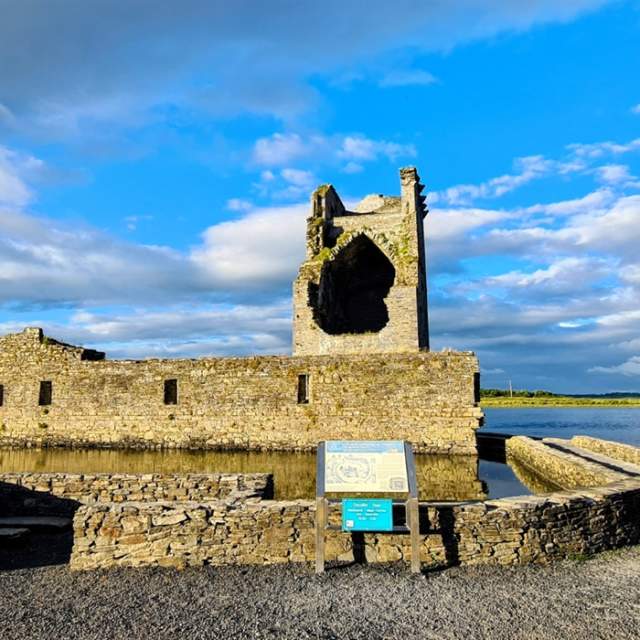
If you’re looking for somewhere a little different to explore this autumn, make your way to Carrigafoyle Castle.

It is the kind of place where the journey feels like part of the discovery. Take TFI Local Link Route 274 to Ballylongford, leave the bus behind and walk the remaining 3 km towards the Shannon Estuary. As you leave the village, the landscape opens out around you — fields, wetland, stretches of water and wide skies — until the castle gradually comes into view.

And then you’re there: Carrigafoyle Castle standing on its rocky outcrop beside the estuary, with very little to distract from the landscape around it.

Built in the late 15th century, this imposing tower house was once an important strategic stronghold, controlling the shipping route towards Limerick. Its Irish name, Carrig an Phoill, means “the rock of the hole”, and it became known as “the Guardian of the Shannon.”

But Carrigafoyle is about more than the castle itself.

The surrounding Shannon Estuary wetlands are full of birdlife, making this a wonderful place to stop, look out across the water and spend some time watching the landscape. Autumn brings another layer to the experience, with changing colours across the fields, softer light and the estuary stretching out beneath the open sky.

There is something particularly atmospheric about standing here beside the old tower. Even if you cannot go inside, you can get close to the castle, walk around its surroundings and begin to sense what this place must once have been like — a stronghold watching over the water, with the estuary providing both its protection and its connection to the wider world.

Carrigafoyle also carries some turbulent history. In 1580, during the Second Desmond Rebellion, the castle was attacked and captured by English forces.

Today, it offers something very different: a chance to step away from the better-known sights, follow the road out towards the estuary and discover a quieter corner of North Kerry where history, wildlife and landscape all come together.

Getting there & accessibility

TFI Local Link Route 274 stops in Ballylongford, around 3 km from Carrigafoyle Castle. Approximately 3 km (35–40 minutes) from Ballylongford village to Carrigafoyle Castle, taking you along small country roads. Take care when walking and be mindful of traffic.

Rather than seeing the 3 km as simply a connection between the bus stop and the castle, think of it as part of the visit. You have time to notice the changing landscape, listen for birds, look across the wetlands and experience this corner of North Kerry at a slower pace before arriving at the castle itself.

Opening & tours

Typical visitor season: May to late October, with internal access during the seasonal opening period. Heritage Ireland currently lists daily access from 9am–6pm during its published season. Check the latest opening information before travelling, as seasonal dates can change.

Tours: Unguided; there are no guided tours.

Ross Castle in Killarney

Back to Top of List

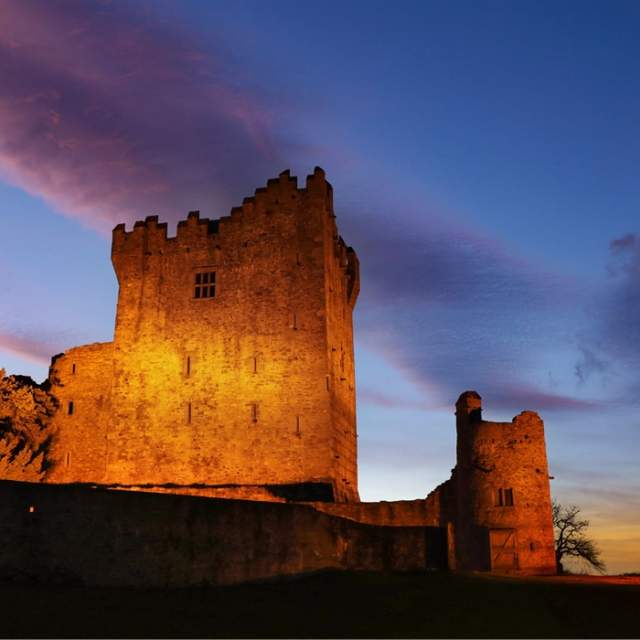
If you’re spending time in Killarney, Ross Castle is an easy place to begin.

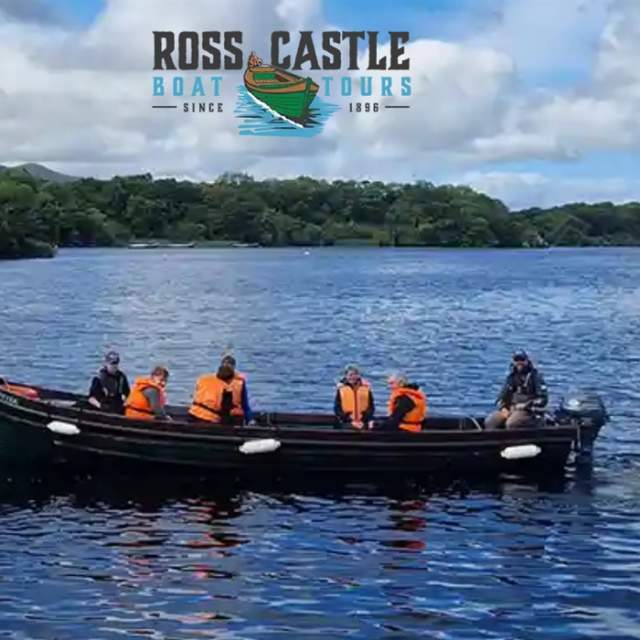
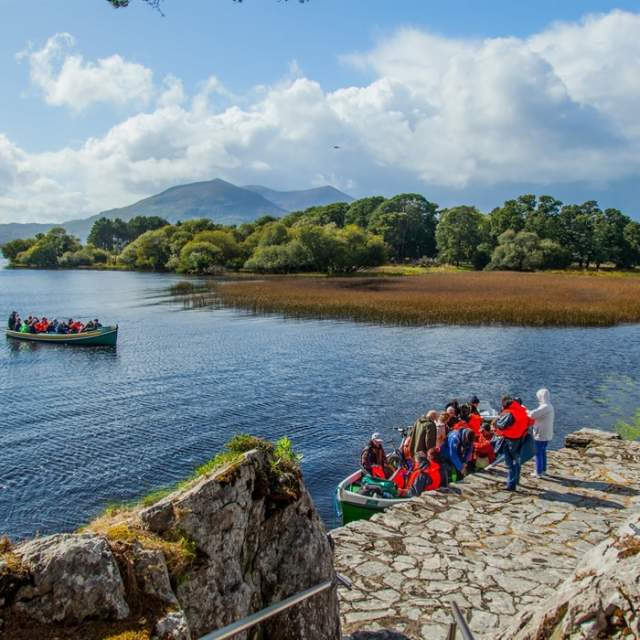
Sitting on the shores of Lough Leane in Killarney National Park, this 15th-century tower house was built by the O’Donoghue clan. In autumn, the setting is particularly beautiful, with the changing colours of the trees around Ross Island and the lake creating a striking backdrop to the old stone castle. On a crisp morning, you can walk along the lakeshore, look across Lough Leane towards the mountains, and see why this has been one of Killarney’s best-known landmarks for centuries.

Inside, the castle brings the history to life. The interior can be visited by guided tour, taking you through its historic rooms and defensive features while introducing some of the stories associated with the O’Donoghue clan and the castle’s past. Access to the interior is by guided tour only and tours operate on a first-come, first-served basis.

There’s currently no TFI Local Link service directly to Ross Castle, but if you’re travelling without a car, you can reach it from Killarney on the Killarney Hop-On Hop-Off Red Bus. It’s a useful option if you want to see more of the National Park in the same day, with the route also stopping near Muckross Abbey, Torc Waterfall and Muckross House & Gardens. You can hop off to explore, then rejoin the bus and continue around the park.

Open: 5 March–3 November 2026, daily, 9.30am–5pm.
Tours: First tour at 10am; last tour at 4.55pm. Interior access is by guided tour only.

Autumn is a lovely time to visit, particularly if you want to combine the castle with a walk around Ross Island and the wider Killarney National Park before continuing your day by bus.

What Can You Do Around Ross Castle?

Kenmare Stone Circle – Kenmare

Back to Top of List

Not every piece of Kerry’s history comes with castle walls.

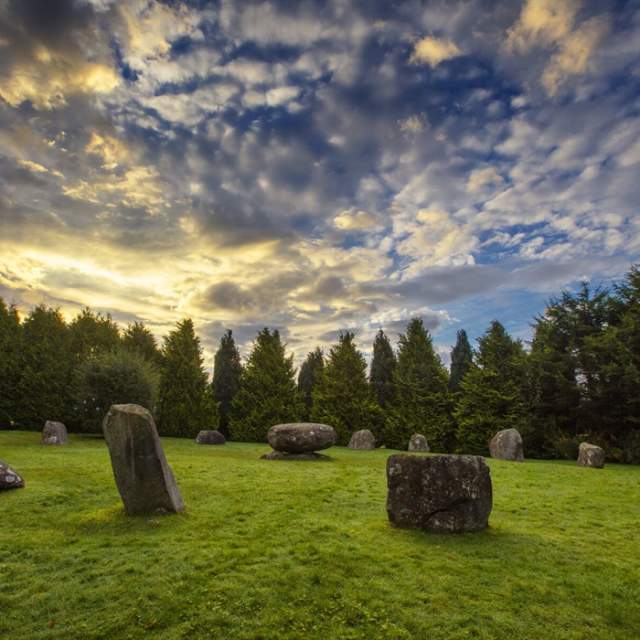
Just a short walk from the centre of Kenmare, you’ll find the Kenmare Stone Circle, an ancient Bronze Age monument tucked among the town’s streets, woodland and mountain landscape. Fifteen stones form the circle, with a large boulder burial at its centre.

There is something quite different about standing among these stones in autumn. The changing light, damp grass and surrounding trees create a quiet atmosphere, and it’s easy to imagine this place thousands of years ago, long before the town of Kenmare grew up around it.

It is also one of the easiest heritage sites in Kerry to reach without a car. TFI Local Link Routes 281 and Route 282 both stop in the heart of Kenmare on Main Street, making the stone circle an easy addition to a day exploring the town.

If you arrive on Route 281 from Waterville or Sneem, the bus stops outside Tom Crean Fish & Wine on Main Street. Route 282 from Castletownbere and Ardgroom stops at the Main Street stop near the Tom Crean Shop. From either stop, the stone circle is only around 350–400 metres away, a flat walk of approximately 4–5 minutes.

Simply walk through the town towards Market Street, where signs lead you down a small lane towards the stone circle. It means you can step off the bus, wander through Kenmare and, within minutes, find yourself standing among stones that have been here for thousands of years.

And that is what makes this such a lovely way to experience Kerry’s past: you don’t need to make a separate journey to a remote archaeological site. You can combine ancient history with a walk through Kenmare, perhaps stopping for lunch or exploring the town before continuing your journey.

Opening

The stone circle is an open-air site rather than a staffed heritage attraction. Current information lists access daily from approximately 8.30am–8.30pm, with a small admission charge collected at the entrance. As opening arrangements can change, check the latest information before travelling.

What to see and do while in Kenmare?

See Kerry’s past at your own pace

What I like about these five places is that they show just how varied Kerry’s heritage is. You can stand beside a medieval castle overlooking a lake, walk through the former home of Daniel O’Connell, explore an ancient stone fort, look out across the Shannon Estuary from a 15th-century tower house, or stand among Bronze Age stones just outside Kenmare.

But you don’t necessarily have to see them as five separate stops.

With TFI Local Link routes connecting towns and villages across Kerry, you can build your day around the places you want to discover. Routes such as 281 and 282 connect different parts of the Iveragh and Kenmare areas, while Route 280 links Cahersiveen with towns including Waterville and Killarney. In Killarney, the Hop-On Hop-Off Red Bus gives you another way to connect some of the National Park’s historic sites.

So make the journey part of the adventure. Take the road less travelled, step off the bus and see where the day takes you. Explore a village, follow a walking route, stop somewhere for a coffee, meet a local and have a chat. Look out across the landscape. Take your time with the places you discover and let the stories behind them unfold.

Make the most of the journey, experience Kerry without the rush, and see its landscapes and history from a different perspective. Follow a little further off the beaten track, connect with the places and people along the way, and discover the stories that have shaped Kerry — one stop, one walk and one conversation at a time.